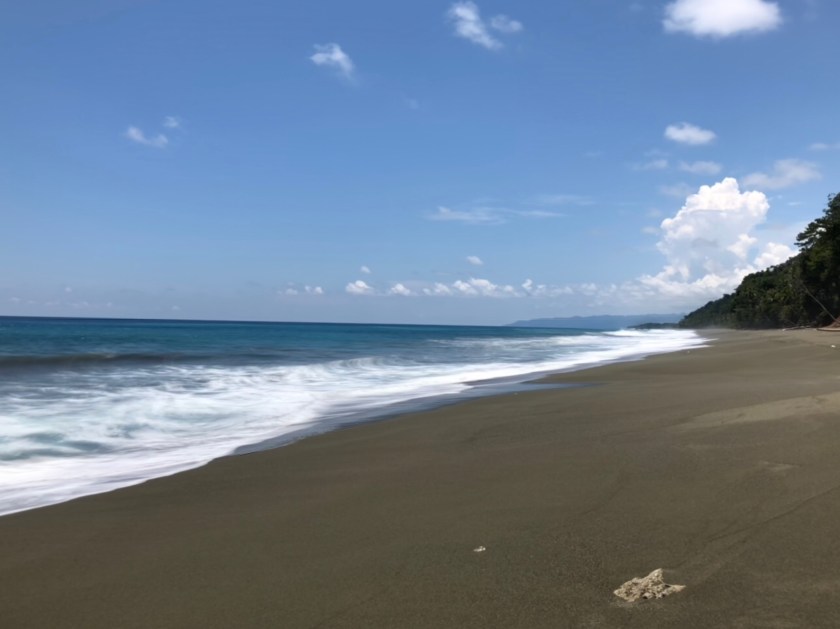
And so, the Big One–the long awaited April road trip arrived like everything else: much faster than we had expected. Our plan was to spend two weeks heading south, checking out the Pacific coastal road all the while moving away from the Semana Santa crowds. Our final destination: the remote Osa peninsula reputed to be quiet even during the busiest of times.
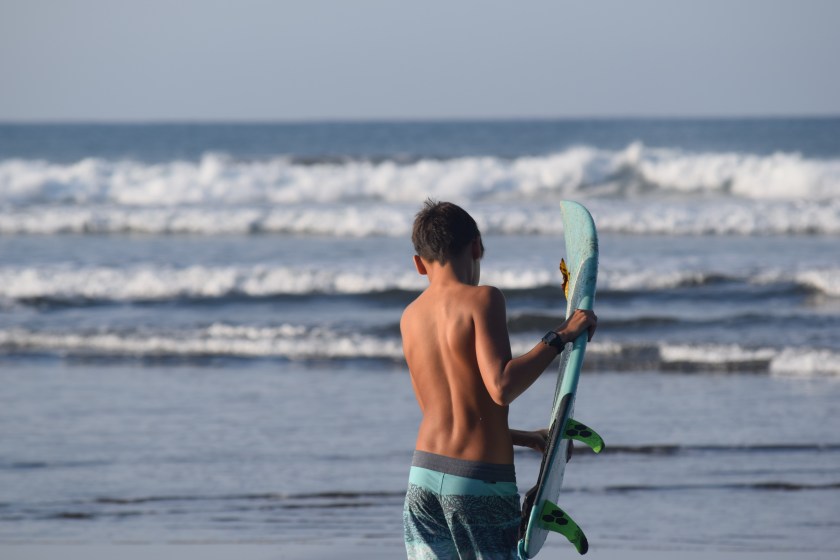
With boards bungied onto the top of the truck, we drove first to Liberia to collect Oli at the airport. A three hour drive south brought us to a deserted stretch of black sand beach called Esterillos. The waves were choppy and disorganized, but the beach was gorgeous and like many on this coast. Wide and with flat hard-packed sand, this one was divided into three sections: Esterillos Este, Esterillos Centro, and Esterillos Oeste. We chose the Este and stayed in a low key accommodation right on the beach that was pretty heavily geared towards yoga enthusiasts. They were a little surprised by our motley crew, especially when the boys cannonballed right into the serene circle of poolside loungers. We sent them hastily to the deserted beach to see what they would make of the chop.
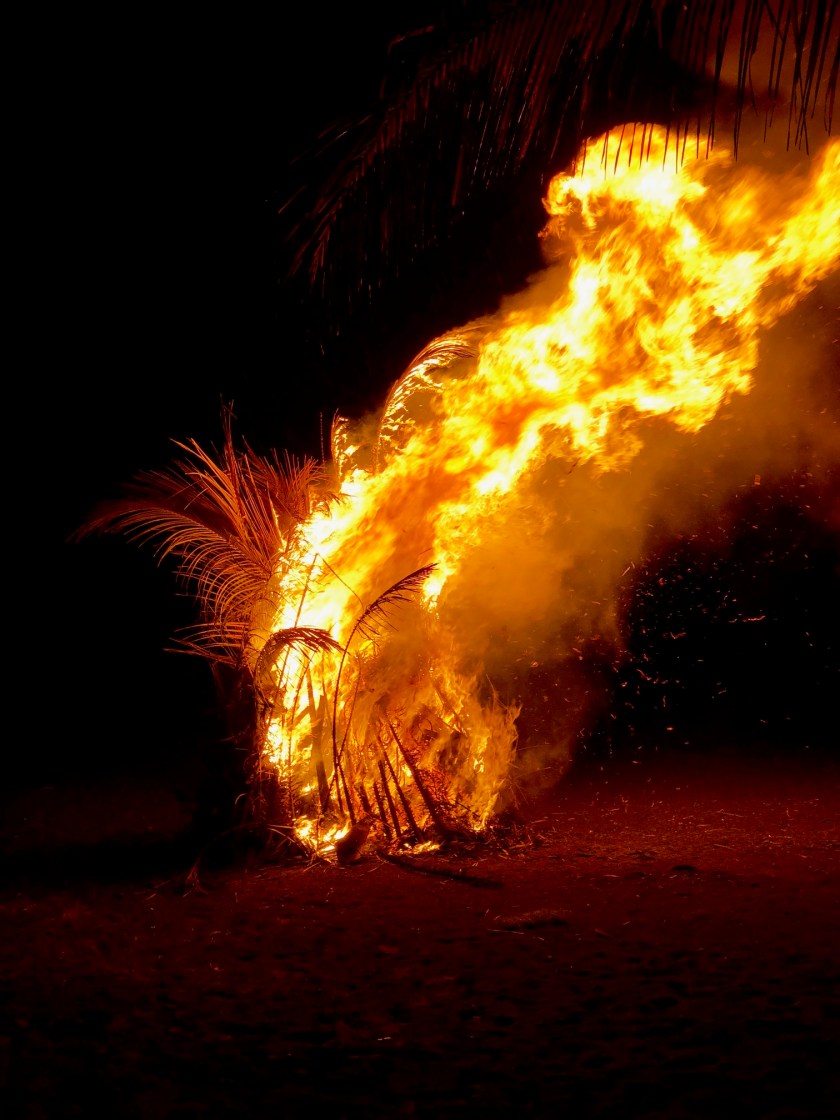
Our hosts had a massive bonfire of palm fronds on the beach that night, which they had barely gotten lit when the rain came with a ferocity that I had long forgotten. It was the first rain of the season for Esterillos, and we felt honored to be there for the arrival of their monsoon. All in all, it was a pretty cosmic collision of the elements, and the yoga tourists clearly thought so too.
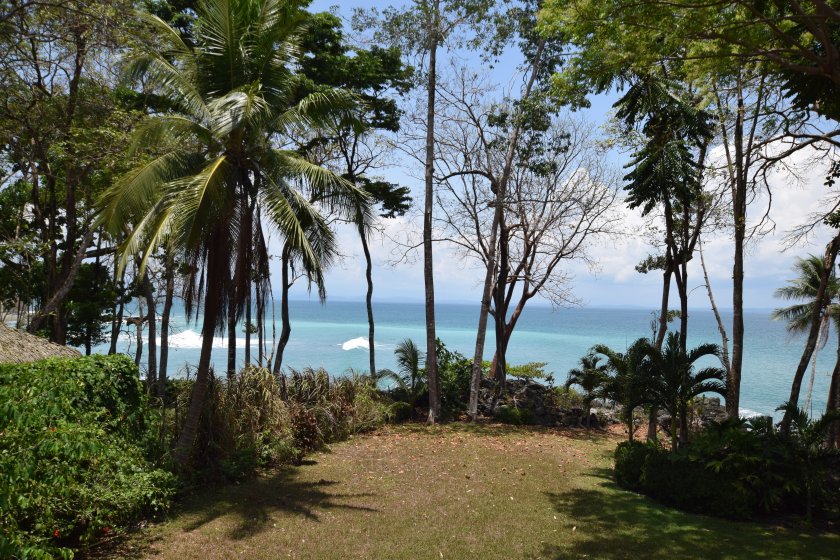
The next day, we packed up and continued our drive south. Much to our surprise, the road was beautifully paved all the way down to Puerto Jimenez, home of the last grocery store at the end of the universe. We had been warned that there was nothing to be found further inland on the peninsula, so we provisioned up and drove the rest of the way to our villa in Matapalo. The villa was dated but comfortable with three stories, all well-endowed with amazing ocean views. White curtains streamed like flags from every window of this cement block of a building, and I found myself feeling a little foolish for having requested a key. This place was wide open, and short of completely boarding up every side of it, there was no way to lock this house. Don’t worry, our caretaker told us, it’s really quiet around here. And so it was.
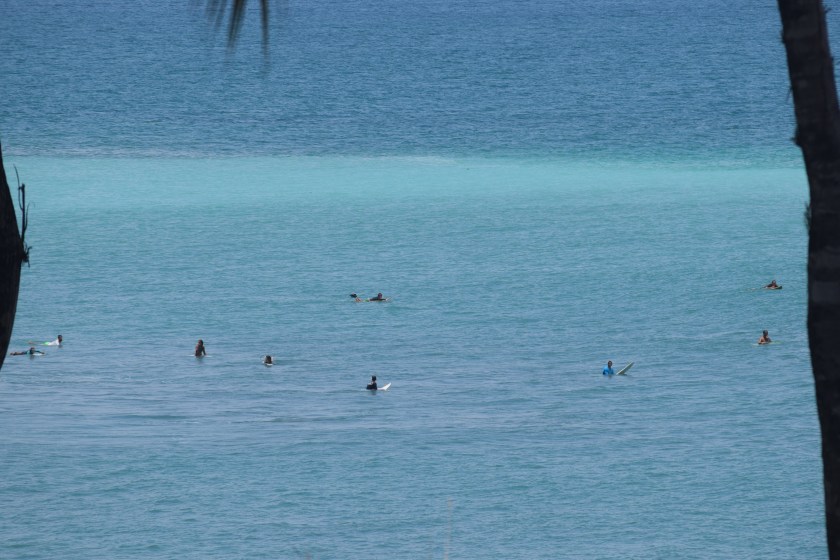
Our villa sat on top of some oceanside cliffs, so the view of the ocean was a big one with water high on the horizon. From our deck we could see the swells gliding past on their way to breaking at nearby Backwash bay. I’ve never had this sidelong view of waves marching past, and of the hopeful surfers waiting to catch them; it was pretty spectacular.
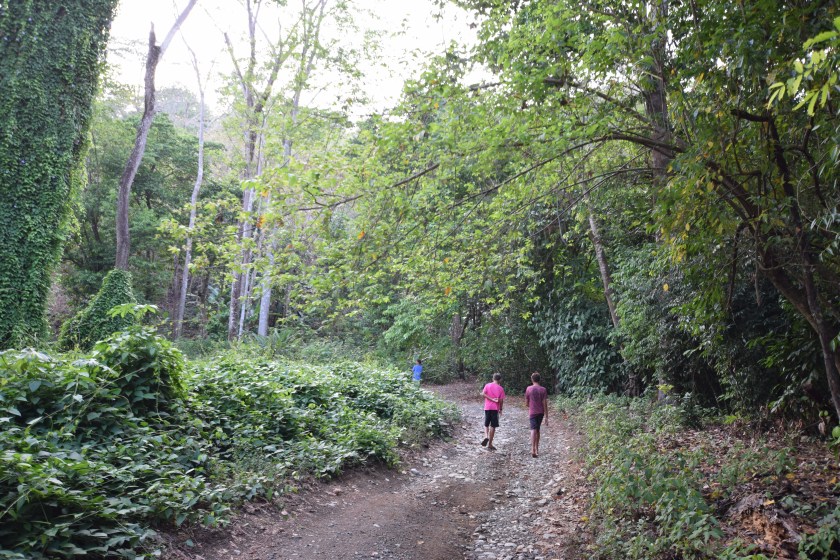
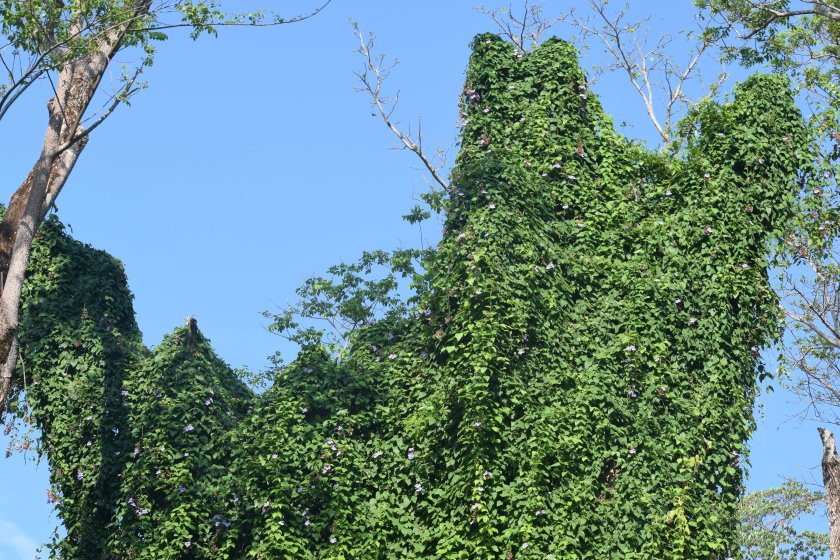
With not a lot of electricity and even less wifi, this place felt so pristine and remote that time seemed to slow down and to simplify. We never made it to Drake Bay, but Matapalo seemed to have it all. To one side of the rutted winding dirt road lay your choice of footpaths snaking through the trees to beautiful rocky beaches. To the other side of the road, upland, there was nothing but dense, untamed jungle. Lumbering down this road in the car seemed to surprise the few people you might find walking in the road, but more often you would find no one.
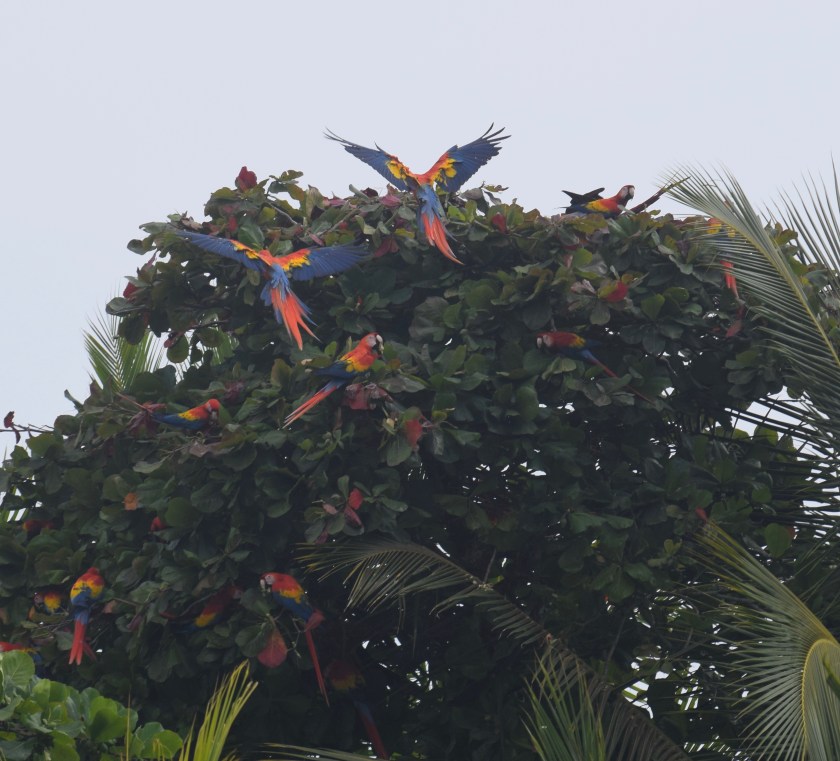
Osa is renowned for its wildlife, and we saw plenty of it but unfortunately got pictures of much less. Even on the beaches you would often do a double take because the sand was at times crawling with hermit crabs. We saw a few toucans in the jungle, but never got a decent picture, and came across many odd looking birds bathing in puddles in the road or just standing around doing their thing. (Oh Vern Laux, where are you??) What were everywhere and impossible to avoid were the scarlet macaws (las lapas rojas).
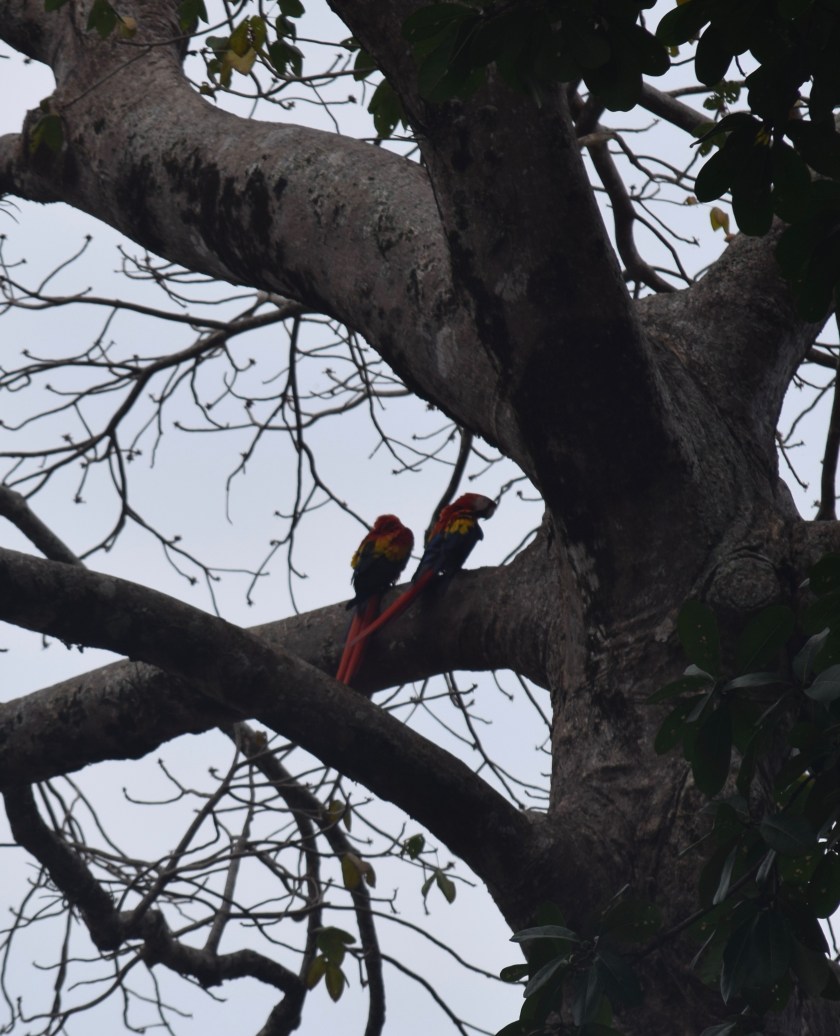
OK, so I never have been much of a bird person, and the squawking of the macaw is neither melodious nor tranquil. In fact, after a while it can become pretty grating on the ears because there are SO many of them. A local told us they mate for life (and that would be a long one–100 years or so) and are consequently found in pairs. Three’s a crowd for the macaws, and I observed a few scuffles from the bases of the trees, hoping to come away with a red feather. My local source said this was either a widow(er) trying to insinuate itself on another pair, or an overgrown juvenile that should have left the parents long ago.
But they were usually in pairs, and the rapport between the pairs was evident in the way they flew together, perched together, preened together and bickered together. The squawking had an incredible range of tone and volume, and after a while, I could almost imagine what they were discussing from their lofty perches. A few hushed comments, and then increasing volume with indignant squawks, pecking and flaring of wings. Then there would be some reconciliation, and a calming back down into contented silence. I could watch them for hours…
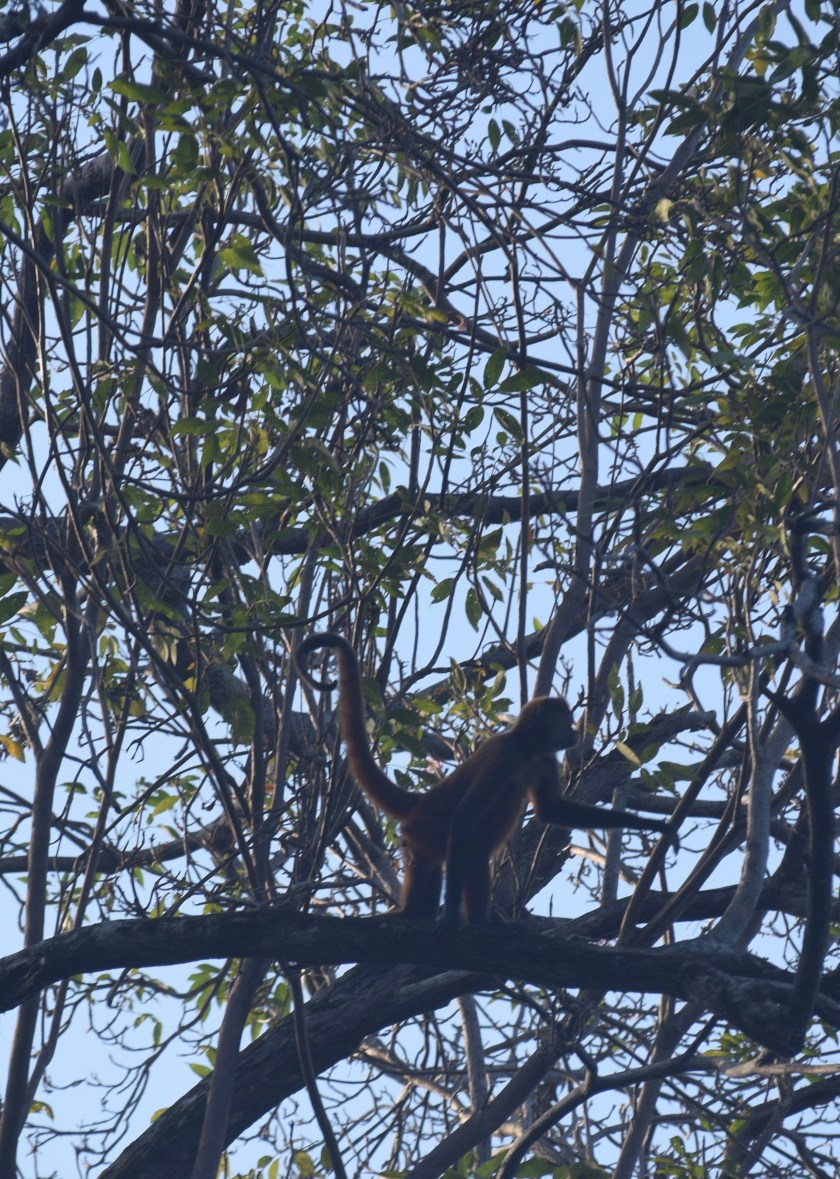
The spider monkeys were like trapeze artists sailing through the trees just palming the branches as they went. A friend told us they don’t have opposable thumbs like Costa Rica’s other monkeys and so rely on momentum to cruise through the canopy. At first you’d think that an entire herd of elephants was descending upon you only to realize that it was just a family of spider monkeys on the move. We watched two adolescents get stuck in the slender branches of a skyscraper of a tree, chirping in distress as they sized up the acrobatic leap before them. Before long distant crashing noises announced the return of their parents to find them a less ambitious route. But when a group of them found a tree to their liking, they would settle into a state of complete quiet. You wouldn’t even know they were there until they decided to get moving again.
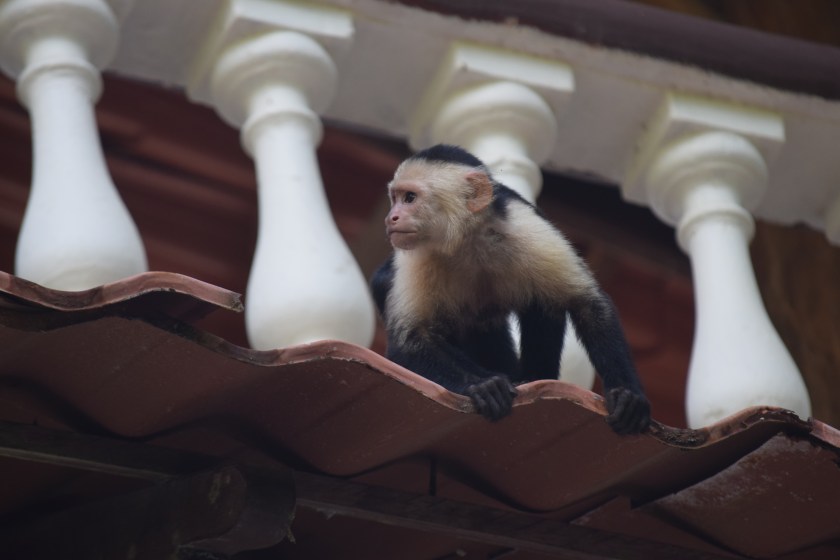
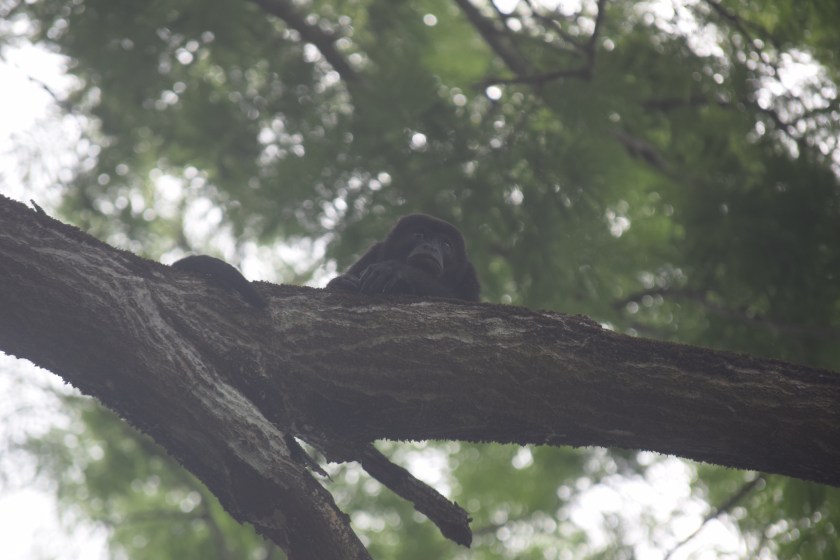
The white faced monkeys surprised me by coming down to earth from the trees, something I have forgotten a monkey can even do. For all the howler monkeys I have seen in Nosara, I have never seen one on the ground. They occasionally get stuck trying to make a traverse through the canopy, especially during dry season when the foliage has receded. But even then, they always seem to go back the way they came; I have never seen one come down.
And since the bottom line remains the beaches for us always, there were three lovely ones all very close to our villa. The boys loved the point breaks, and during certain tides, they could catch one wave and ride it right out of view to connect with the break at the next beach. Lots of rocks here though, both in the water and on the beaches. When the waves crashed onto the shore you could hear the sounds of the rolling rocks underwater as the wave receded. It was bizarre; the muffled sound reminded me of distant fireworks. You could feel them too, crashing against your ankles, if you were unfortunate enough to spectate too closely. Not great beaches for the tender-footed!
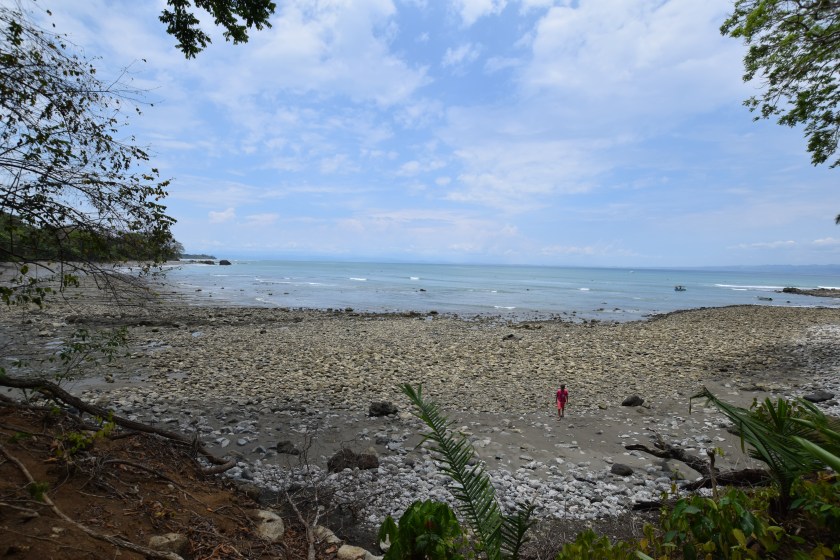
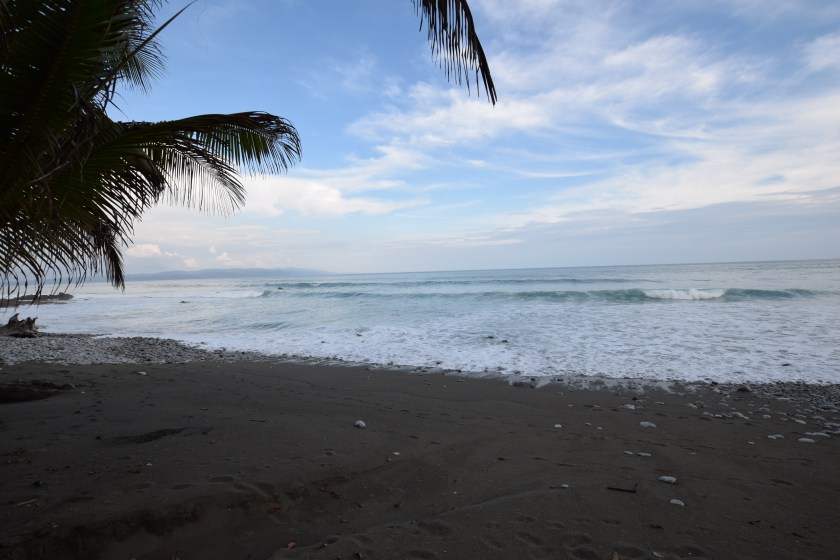
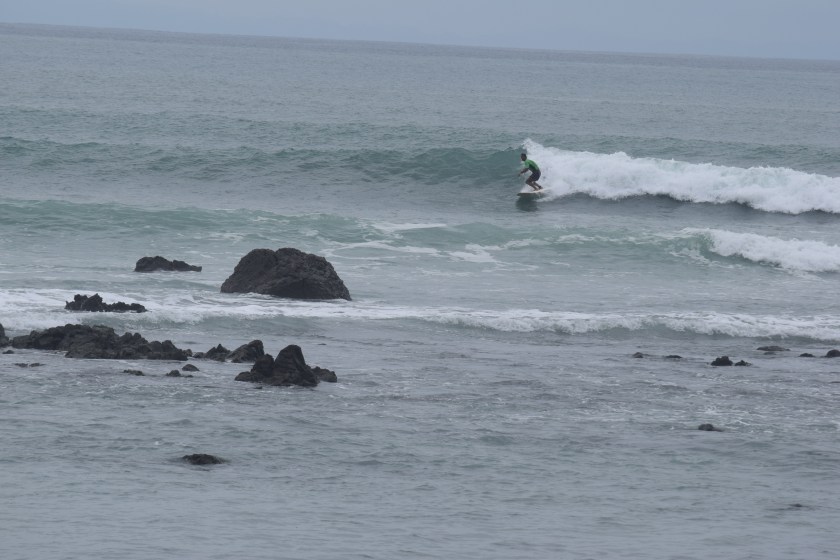
Eventually we dragged ourselves out of beautiful Matapalo and headed upland to an ecolodge nestled in a remote stretch of rain forest. Surprisingly, we saw fewer animals from that height but the jungle views were gorgeous. We had long forgotten what green looked like.
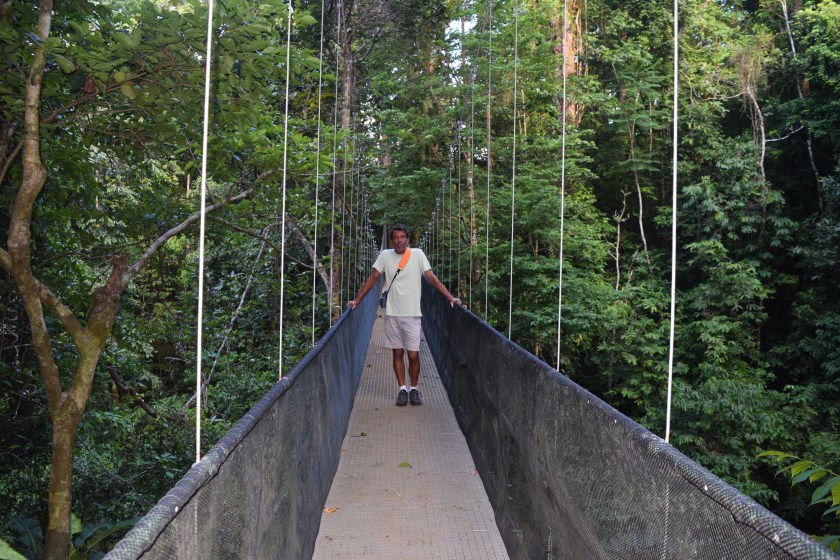
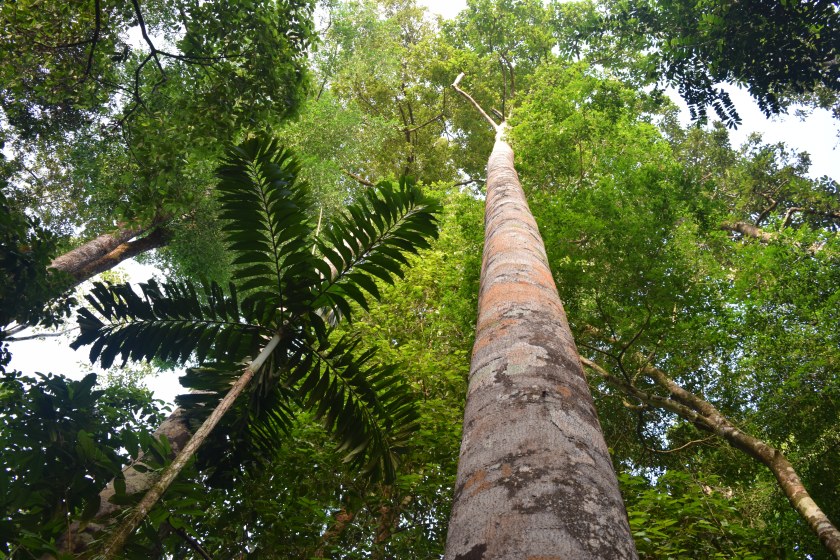
b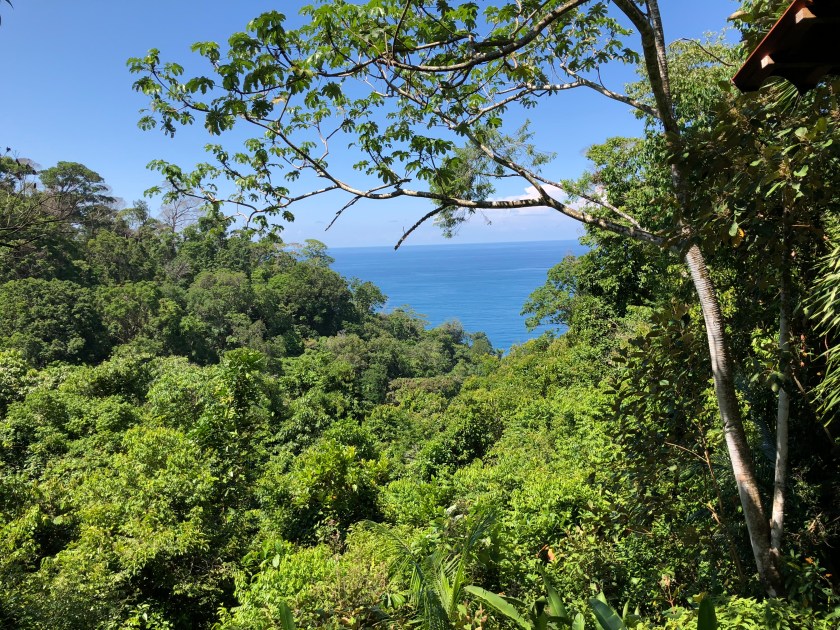
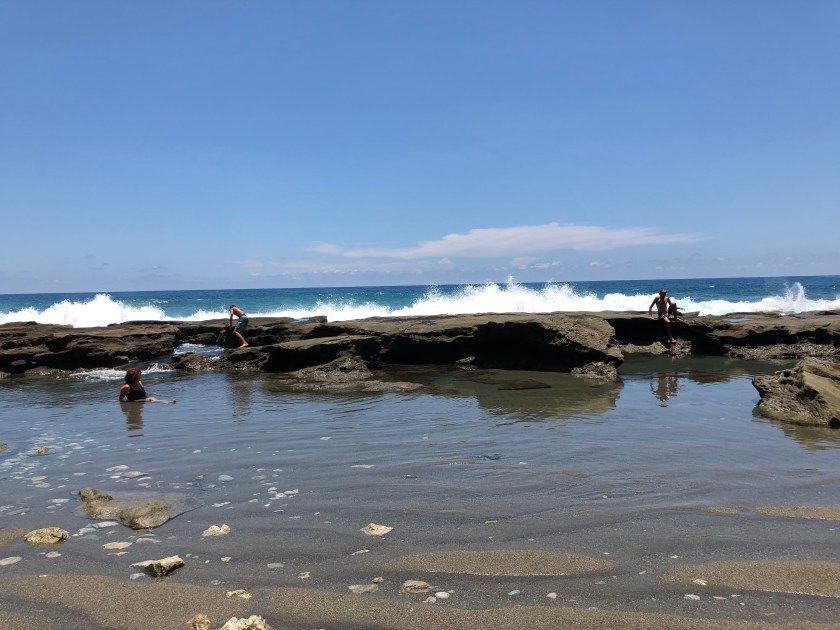
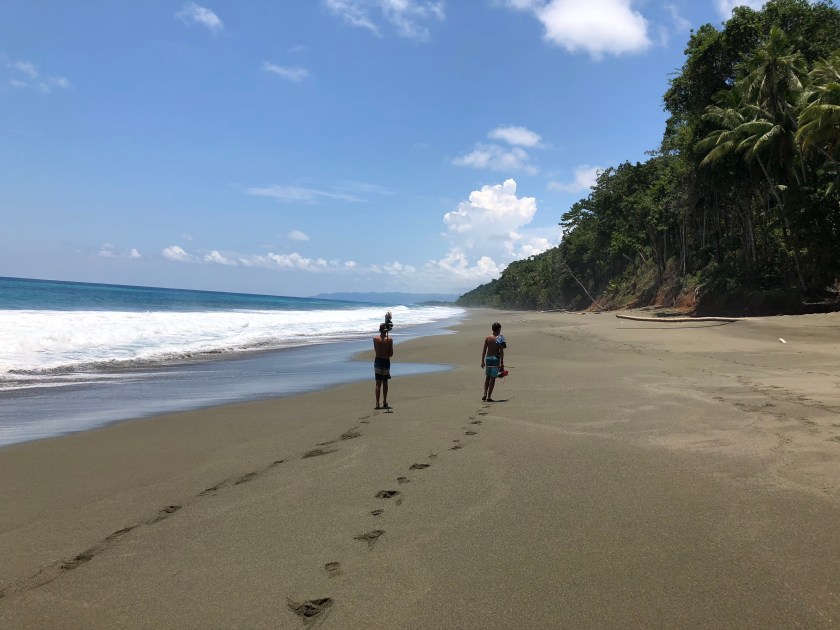
But the most breathtaking view in this reserve was again at the beach. After hiking back down to sea level (because I guess we just can’t take being inland at all), we emerged from the rain forest onto a completely abandoned remote stretch of black sand beach. Nothing for miles all along this western coast of the Osa Peninsula. We walked the beach for some distance and soaked in some tidal pools, feeling like we had arrived at the end of the earth.
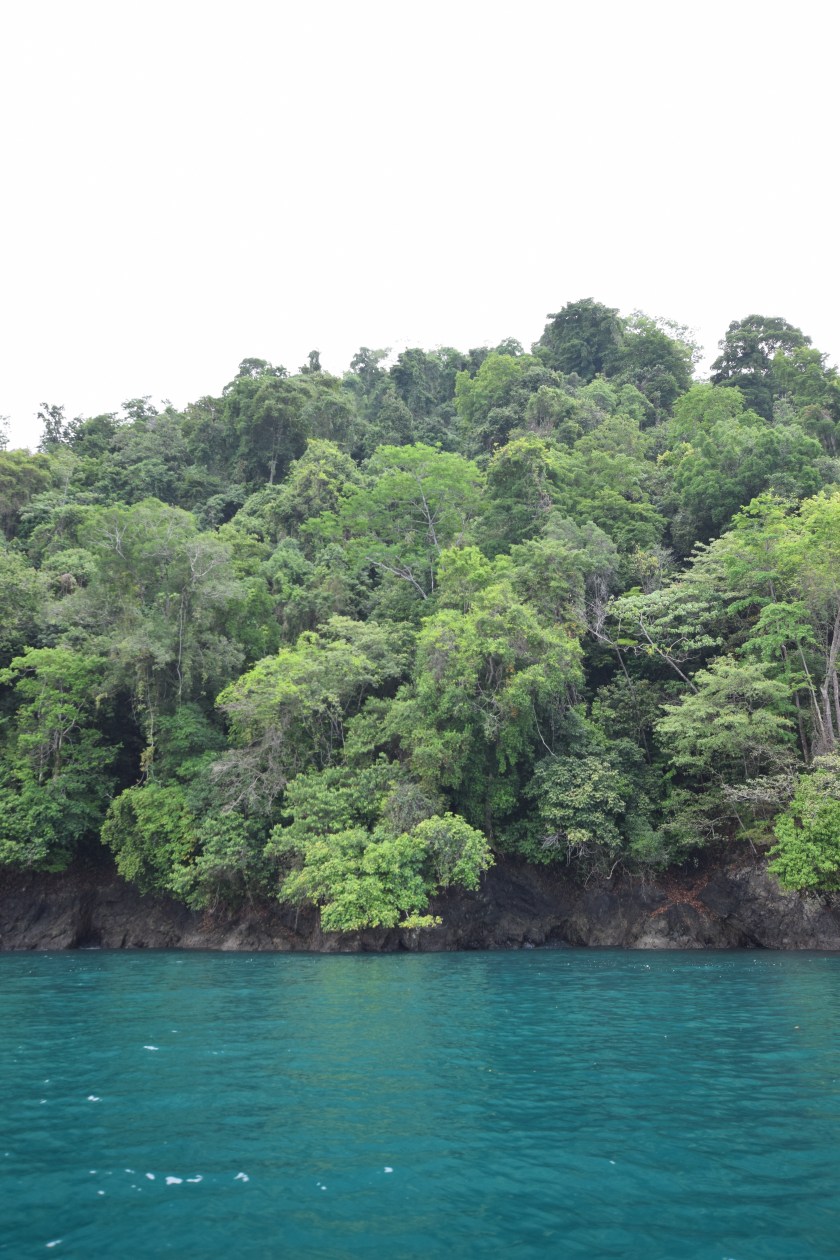
It’s a funny thing, what novelty does to your sense of time. We were not here for very long, but it seemed like we were. In a good way. Be that as it may, it was eventually time to pack out of Osa and start heading back to “civilization”. We stopped for one last night in Puerto Jimenez so that we could take a boat ride into the Golfo the following morning. This was another sparsely populated area, where, aside from occasional hard-core fisherman’s retreats, the banks of the Gulf had nothing but dense forest right up to the waterline. The color of the water was extraordinary; a deep greenish blue that was probably the result of the dense vegetation on all sides.
A pod of dolphins lives in this Gulf for most of the year, and we were also told that this time of year they even spotted an occasional whale shark. No whale shark sightings, but we did find the dolphin pod. We were a little surprised when our captain gunned the engine and took off in the opposite direction; he knew they would chase the boat and play in the wake. They even swam right alongside the boat and tried to keep up with us, reminding me of that dog that has to race with passing cars.
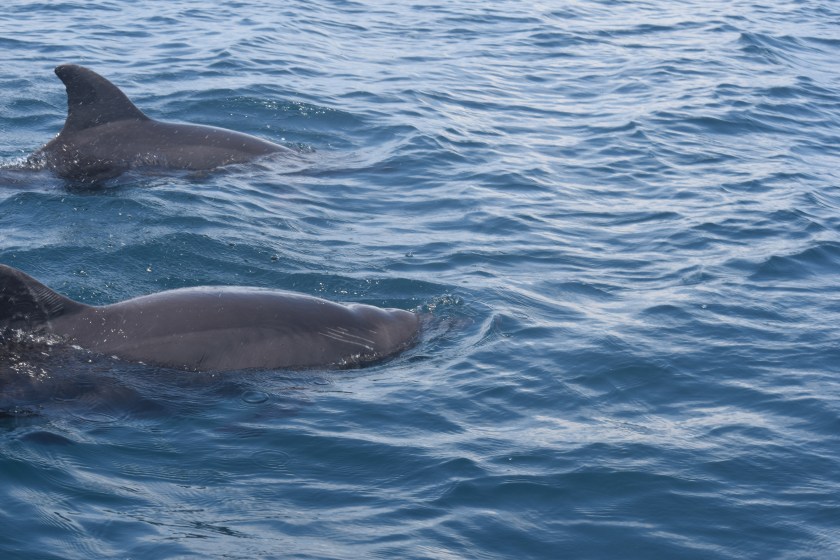
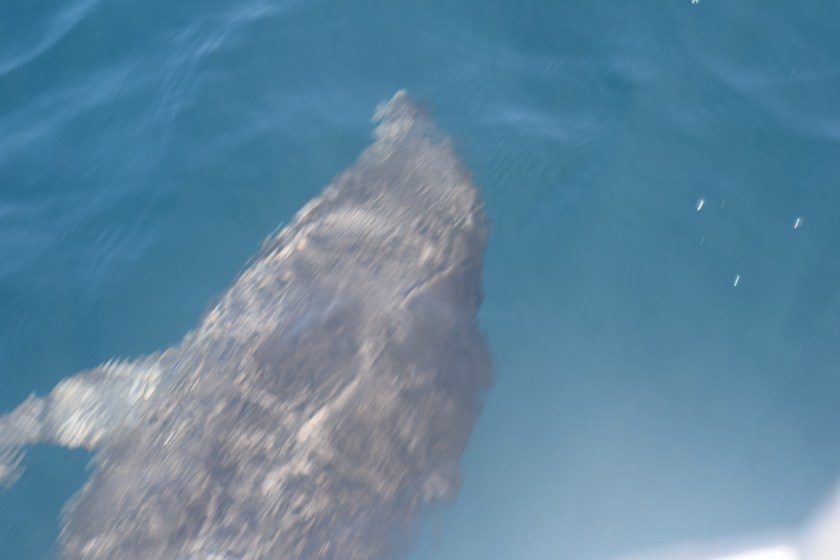
It looked dangerous to me, but the dolphins seemed to be having a blast. We dropped Russell in with a face mask, holding a line behind the boat, but we almost drowned him trying to keep up with the pod.
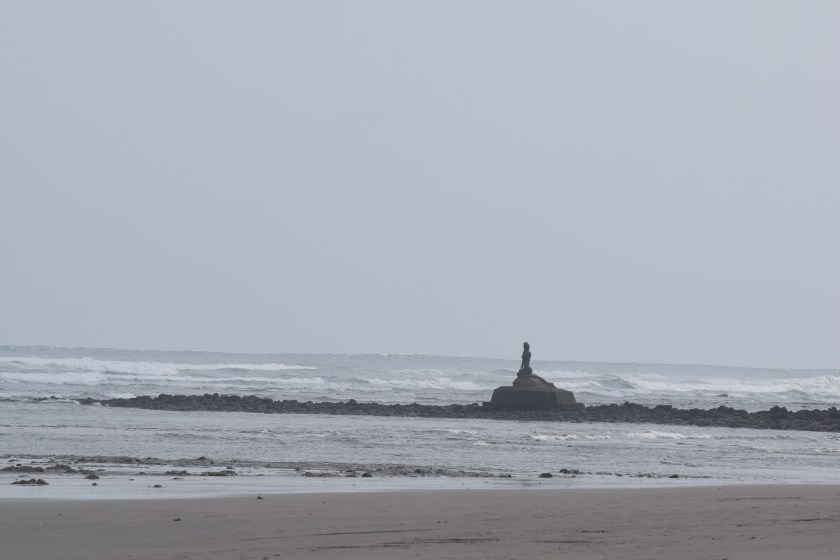
The following day, we set out for the coastal road back north. We stopped this time in Esterillos Oeste and found the beach conditions similar to those in Esterillos Este. And another epic thunderstorm–what is it about Esterillos?
It was nice to get home though the dehydration of Guanacaste struck me almost palpably driving into it as opposed to having it slowly dry out around you. The palms droop, and the clouds of dust hang thickly in the streets after each passing car. And there is nothing green anymore that is not dulled by a film of dust.
In the region of Guanacaste, when we tell people we are spending the year in Nosara, they think about surfing beaches, swarms of gringo expats, a plethora of yoga retreats and monkey sanctuaries. But in Puntarenas when we say Nosara, they think of Guanacaste. For Ticos elsewhere in the country, Guanacaste is know for being dry and awful for its dryness. And also its poverty–the ranchers and farmers survive on the very razor’s edge of a sweet spot between too much and too little rain. They would shake their their heads ruefully and say, Ahhh, Guanacaste is very dry. Soon enough though, our rain is coming, and the metamorphosis will be epic, I’m sure.
 Kathawala Gap Year
Allison, I love reading about your adventure and seeing your photos, particularly those of the wildlife, (native, that is!) Please send your boys a ‘hello’ from me and enjoy the rest of the ride. Sandy
LikeLiked by 1 person
I will, Sandy! And thanks 🙂
LikeLike